

Your dog has a few more gray hairs, takes longer to get up from a nap, and now the pet food aisle seems full of bags marked senior. Is it time to switch? The answer to that senior dog nutrition question starts with your dog’s health, not the age printed on a bag.
There is no universal birthday when an adult dog needs senior food. A healthy older dog that maintains an appropriate weight and muscle on a complete and balanced adult diet may be doing well on that food. Another dog may benefit from a different calorie level or a diet chosen for a diagnosed condition. The best starting point is how your dog is doing, rather than the age printed on a bag. Tufts University veterinary nutritionists and the American Animal Hospital Association (AAHA) both recommend an individual approach.
Senior dog nutrition: does every older dog need senior food?
No. “Senior” describes a product’s intended audience, but there is no separate AAFCO nutrient profile for senior dogs. Foods carrying that label can differ considerably in calories and nutrients. An older dog who is gaining body fat may need fewer calories; one who is losing weight or muscle may need a different plan altogether. Ask your vet to assess both body condition (fat stores) and muscle condition (muscle loss). A dog can gain fat while losing muscle, so the scale alone does not tell the whole story. AAHA senior nutrition guidance
Do not assume an older dog needs a low-protein diet. Protein needs vary, and restricting protein just because a dog is old can work against maintaining muscle. A dog with a diagnosed condition, such as chronic kidney disease, may need a specific therapeutic diet selected and monitored by a veterinarian. A regular bag labeled “senior” is not a substitute for that plan. Tufts · Merck Veterinary Manual
Signs it is time to review your dog’s diet
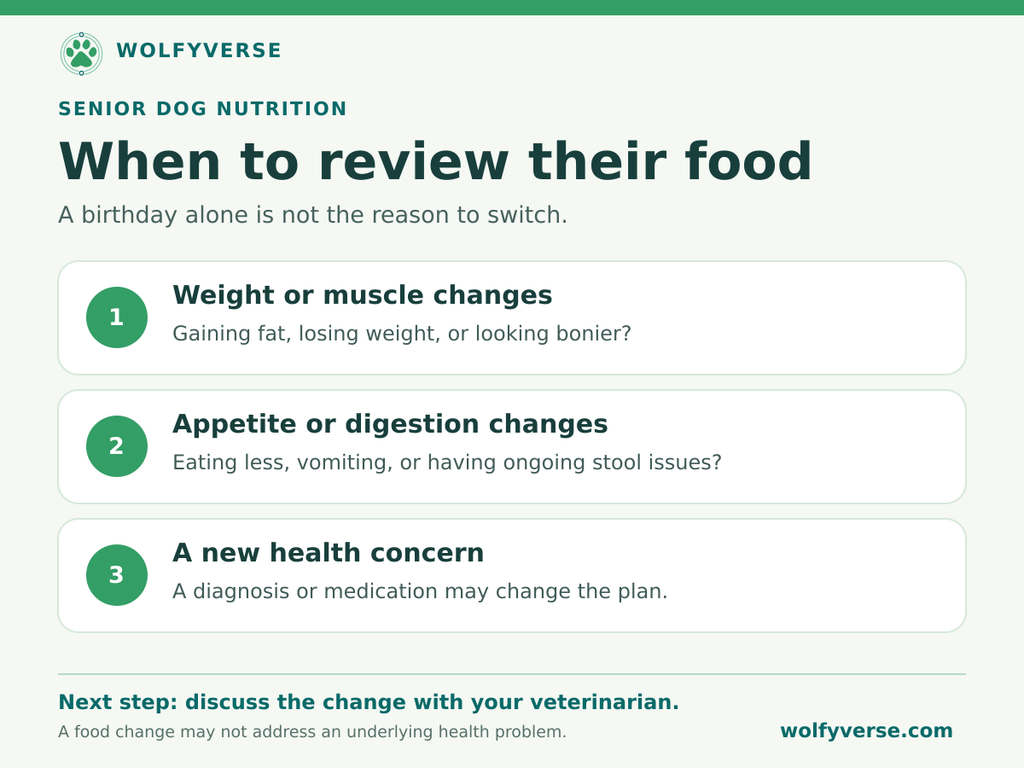
A food review is worthwhile if you notice any of these changes:
- Weight creeping up. The feeding amount may need adjusting as activity changes. Count treats, chews, toppers, and table scraps too.
- Unplanned weight loss or a bonier back or hips. Loss of muscle deserves a veterinary assessment, even if your dog still seems eager to eat.
- A change in appetite, chewing, or drinking. Dental pain and illness can affect eating; switching flavors may hide a problem rather than solve it.
- Ongoing vomiting, diarrhea, or trouble passing stool. The cause is not always the food, so ask your vet before repeatedly changing diets.
- A new diagnosis or medication. Kidney disease and other medical conditions may change which nutrients or feeding plan are appropriate.
These signs are reasons for a conversation and, when appropriate, an exam—not proof that a senior formula is needed. If your dog has a sudden or marked change in appetite or weight, persistent vomiting or diarrhea, or appears weak or unwell, contact your veterinarian promptly. AAHA senior assessment guidance · Cornell University College of Veterinary Medicine
What to check before choosing a new food
Start with the nutritional adequacy statement, often printed in small type on the package. For a healthy adult dog, ask your vet whether a food labeled complete and balanced for adult maintenance is appropriate. The words “senior,” “premium,” or “natural” do not replace that statement. Also compare calories per cup, can, or serving: two foods fed by the same scoop can provide different amounts of energy. FDA guide to complete and balanced pet food · WSAVA guide to selecting pet food
Think about the whole day, not just breakfast and dinner. Treats, supplements, and table scraps can alter calorie intake and crowd out a complete diet. Tell your vet what your dog actually eats, including the brand, exact recipe, amount, and any extras. If you feed a home-prepared diet, ask for help making sure it is complete and balanced; an improvised recipe can miss essential nutrients. Cornell
Questions to bring to the vet
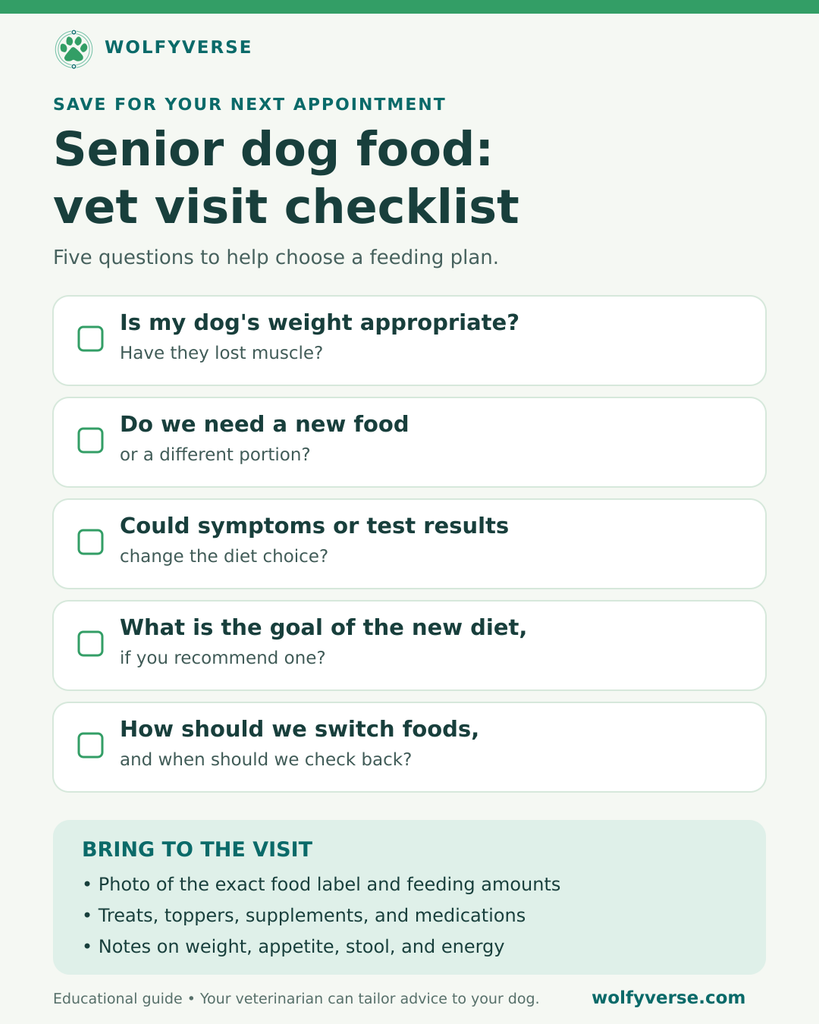
Bring a photo of the food label and a short feeding log. These questions can make the visit more useful:
- Is my dog’s current weight appropriate, and have they lost muscle? Ask the vet to show you what they notice and how to track changes at home.
- Does my dog need a different food, or just a different portion? Ask for a daily calorie target and a starting amount for the exact food you use.
- Would any symptoms or test results change the diet choice? Discuss changes in appetite, thirst, stool, mobility, or energy, and whether an exam or tests are needed.
- If a new diet is recommended, what is the goal? Clarify whether it is intended for weight control, another health concern, or a diagnosed medical condition.
- How should we switch, and when should we check back? Ask what to watch for and when to weigh your dog again.
AAHA recommends assessing senior pets’ eating and drinking habits, weight and muscle, medications, and supplements as part of their care. Depending on the dog, a senior health workup may be recommended once or twice a year. AAHA senior care guidelines
How to change foods once you have a plan
For a routine change, mix the old and new foods gradually. A simple starting approach is about 75% old and 25% new, followed by progressively larger portions of the new food over several days. Dogs with sensitive stomachs may need a slower transition. Your vet may give different instructions for a therapeutic diet or a dog who is ill. Watch appetite and stool during the change, and call the vet if digestive problems persist or your dog seems unwell. Cornell’s diet transition guidance
After the switch, measure portions and keep an eye on weight and muscle. The first feeding amount is a starting point; your dog’s response tells you whether the plan needs adjusting.
The takeaway
The right food for an older dog depends on their condition and health needs. If your dog is thriving on a complete and balanced adult food, age alone does not require a change. If their weight, muscle, appetite, or health has changed, bring those observations to your vet and choose the next diet together.
This article is general educational information and cannot diagnose your dog or replace advice from your veterinarian.
Sources
- American Animal Hospital Association: Senior Care Guidelines—Nutrition
- American Animal Hospital Association: Evaluating the Healthy Senior Pet
- Tufts University Cummings School: When Should I Switch My Pet to a Senior Diet?
- World Small Animal Veterinary Association: Guidelines on Selecting Pet Foods
- U.S. Food and Drug Administration: “Complete and Balanced” Pet Food
- Cornell University College of Veterinary Medicine: Re-evaluating Your Dog’s Diet
- Merck Veterinary Manual: Renal Dysfunction in Dogs and Cats