
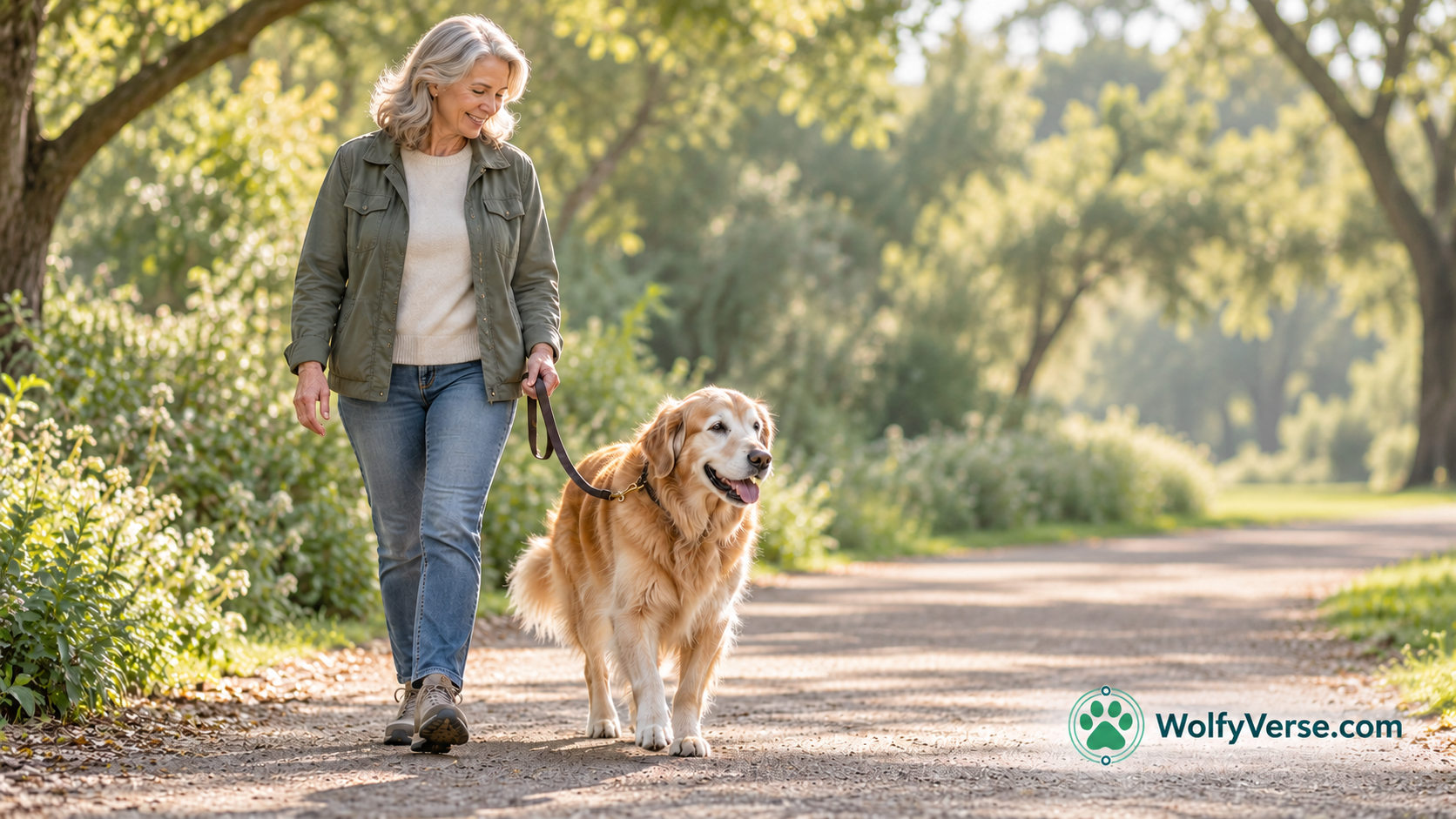
Your dog may no longer race to the door at the word “walk,” but that doesn’t mean they should stop moving. Regular, comfortable activity gives many older dogs a chance to use their muscles, explore familiar smells, and enjoy time with you.
So how much exercise does a senior dog need? There is no universal daily target. A healthy older dog may enjoy several substantial outings, while a dog with arthritis or another medical condition may do better with brief, gentle walks. Start with what your dog can comfortably do now, keep the routine consistent, and watch how they feel later that day and the following morning. The American Animal Hospital Association (AAHA) recommends adapting activity to a senior pet’s energy and mobility. Source: AAHA
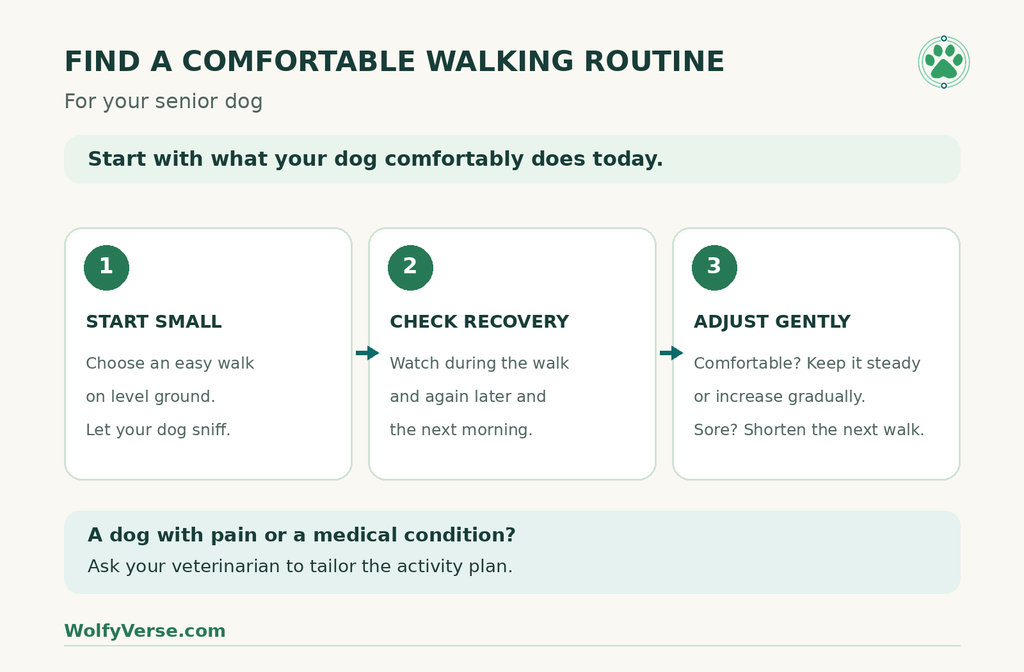
A sensible starting point for daily walks
If your dog is already walking comfortably, you can usually keep a familiar walking routine and adjust its pace or length as needed. If they have become less active, begin with short, easy outings and build gradually rather than trying to cover their old distance on day one.
For a dog with osteoarthritis who is starting a regular walking program, VCA Animal Hospitals gives 10 minutes of walking three times a day as one possible starting point, increasing gradually only if stiffness does not worsen. That is an example for a particular situation, not a goal every senior dog needs to meet. A frail dog, a dog recovering from illness, or one with heart or breathing problems needs an individual plan from a veterinarian. Source: VCA Animal Hospitals
| Your dog’s situation | A reasonable approach |
|---|---|
| Active and comfortable on walks | Continue regular outings at a pace they enjoy; adjust based on recovery. |
| Slowing down or returning after time off | Try shorter, easier walks and increase only when they remain comfortable afterward. |
| Stiff, limping, or diagnosed with arthritis | Ask your veterinarian for a plan; steady, controlled walks may be helpful, but the duration should fit your dog. |
| Newly weak, coughing, unusually winded, or struggling to rise | Arrange a veterinary assessment before increasing activity. |
These are starting approaches, not diagnostic categories. The best guide is how your individual dog moves, feels, and recovers.
What counts as good exercise for an older dog?
Sniff walks
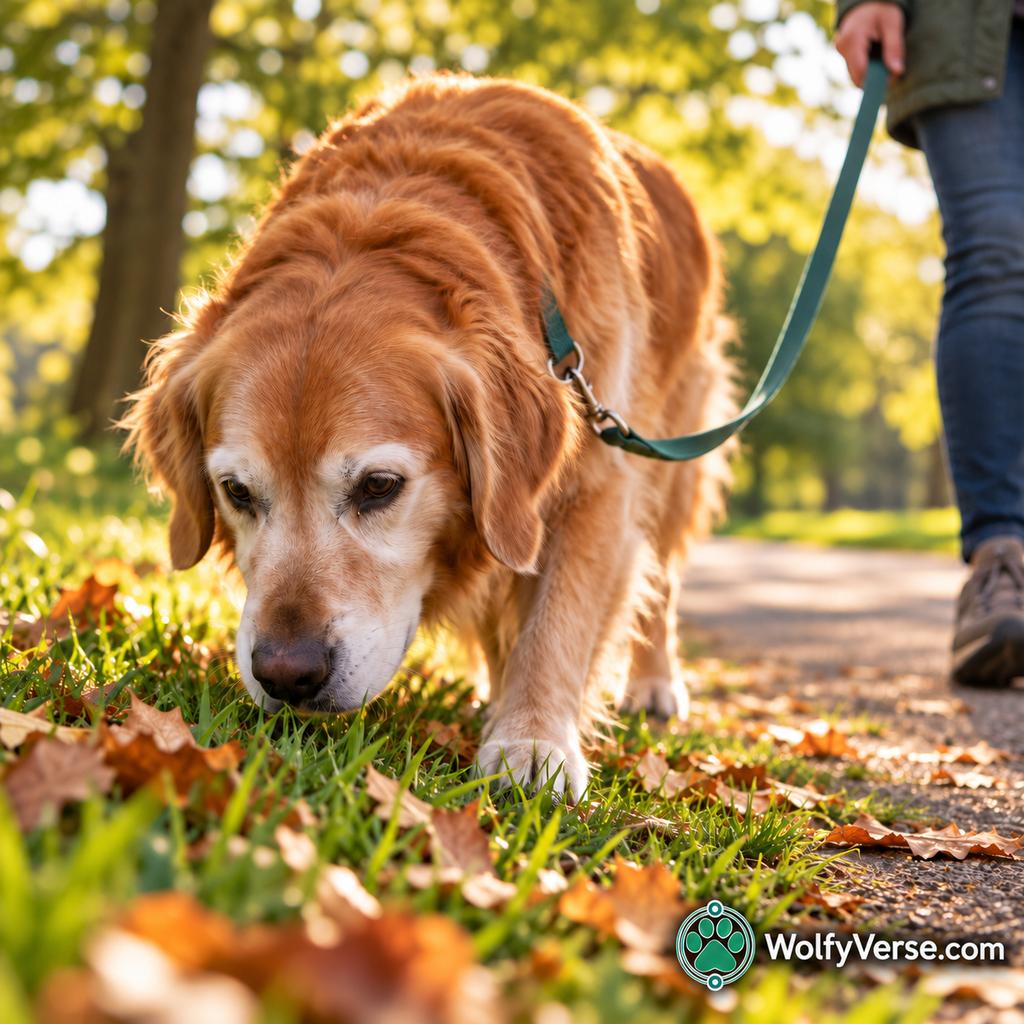
Let your dog choose a comfortable pace and pause to investigate. A slow walk around the block can provide both gentle movement and mental enrichment. You do not have to measure its value by miles covered. AAHA highlights scent-focused walks as an enriching option for senior dogs. Source: AAHA
Short, regular walks
Several manageable outings may suit a dog with joint discomfort better than an occasional long hike. Choose even ground with reliable traction, give your dog time to warm up, and turn back while they still seem comfortable. If you want to increase activity, add a little at a time and check for stiffness afterward. Source: VCA Animal Hospitals
Gentle games and indoor enrichment
Try an easy food search, a snuffle mat, or a short session practicing familiar cues. Keep treats within reach so your dog does not need to leap or twist. Mental activities are especially useful when weather or limited mobility makes outdoor time shorter. Source: AAHA
Swimming or supervised water exercise
Some dogs enjoy water-based activity, and its lower impact may be useful for dogs with joint problems. It is not suitable for every dog. Ask your veterinarian whether it fits your dog’s condition, and introduce it only in a safe, supervised setting. Source: AAHA
High-speed fetch, repeated jumping, sharp turns, and slippery surfaces can be harder on painful joints. If your dog has arthritis, ask your vet about suitable games and exercises instead of assuming that an activity they loved when young still feels good now. Source: VCA Animal Hospitals
How can you tell if your senior dog is getting too much exercise?
Watch your dog during the activity and after they rest. Slow down or end an outing if they begin lagging, repeatedly stop, limp, seem unwilling to continue, or have noticeably more trouble moving than usual. New stiffness later in the day or the next morning is also a reason to shorten the next outing and speak with your veterinarian if it persists.
Changes such as reluctance to use stairs, difficulty getting up, limping, or reduced stamina deserve attention. They may reflect pain or another health issue and should not automatically be dismissed as “just getting old.” Source: VCA Animal Hospitals
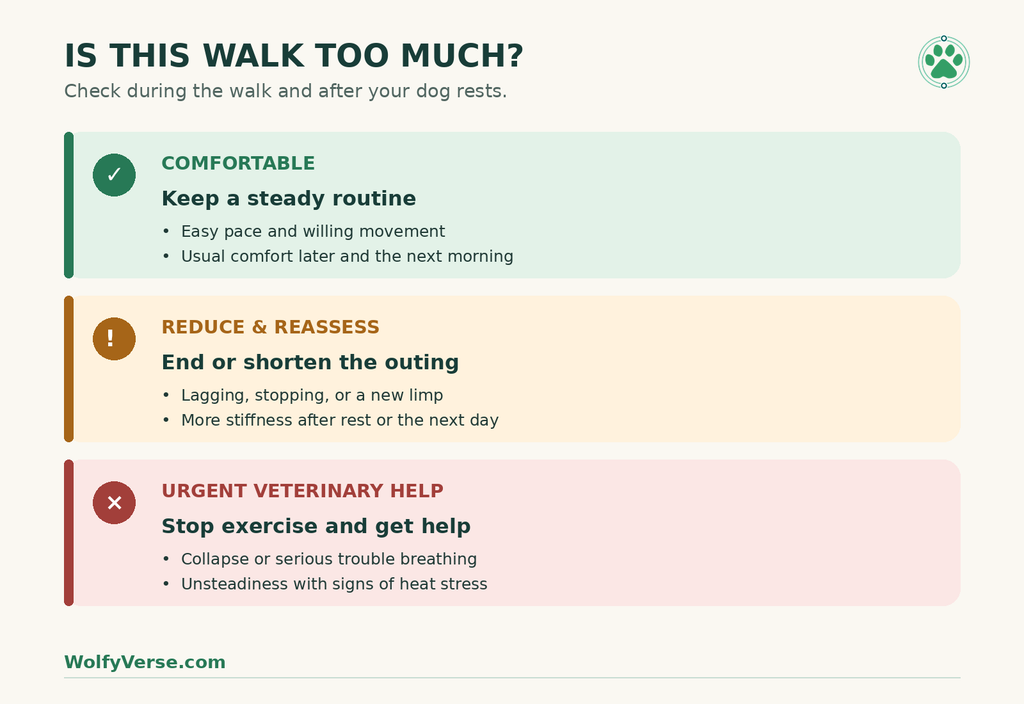
Stop and seek urgent veterinary help if your dog collapses, has severe trouble breathing, becomes unsteady in the heat, or appears to be in acute distress. In hot weather, choose cooler hours, bring water, and avoid surfaces that may burn paws. Source: American Veterinary Medical Association
A simple routine you can adjust
For a dog who has been cleared for gentle activity, a day might look like this:
- Morning: an easy walk with time to sniff.
- Midday: a brief potty outing or a calm indoor scent game.
- Evening: another relaxed walk if your dog still seems comfortable.
The outings do not have to be equal in length. On a low-energy day, make them shorter. On a good day, resist the temptation to make a sudden jump in distance; check how your dog feels the next morning before changing the routine. For a dog with significant mobility problems, your veterinarian can help plan safe activity and discuss rehabilitation options. Source: AAHA
When to ask your veterinarian
Talk with your vet before starting a new exercise program if your dog has a diagnosed condition, has been inactive for a while, or shows pain. Book an appointment if you notice a persistent limp, a sudden drop in stamina, coughing on walks, or increasing trouble standing up. A vet can help distinguish normal changes in pace from treatable problems and recommend an activity level that fits your dog. Sources: AAHA, VCA Animal Hospitals
Frequently asked questions
Is one long walk or several short walks better for a senior dog?
It depends on the dog. Short, regular walks are often easier to adjust for a dog with arthritis or reduced stamina. If your dog enjoys longer walks and recovers well, ask your veterinarian whether there is any reason to limit them. Source: VCA Animal Hospitals
Should I walk my senior dog every day?
Many senior dogs benefit from some form of daily movement and enrichment, even if it is a short, slow outing. The right duration and intensity depend on their health and mobility. Source: AAHA
What if my dog wants to keep going but is sore afterward?
Use their recovery, not only their enthusiasm, to set the limit. Shorten the next walk, avoid sudden increases, and ask your vet about pain or mobility issues if soreness recurs. Source: VCA Animal Hospitals
Can an older dog still play fetch?
Some can, but repeated sprints, abrupt stops, and sharp turns may aggravate joint problems. If your dog has arthritis, ask your vet about safer ways to play; rolling a toy gently or hiding it nearby may be a better fit. Source: VCA Animal Hospitals
The takeaway
Your senior dog does not need to keep up with their younger self. Aim for comfortable, consistent movement that fits the dog in front of you today. A shorter walk with plenty of time to sniff can still be a meaningful part of their day. If activity brings pain, unusual fatigue, or a change in breathing, let your veterinarian help you adjust the plan.
This article is for general education and does not replace advice from your veterinarian, who can account for your dog’s medical history and current condition.